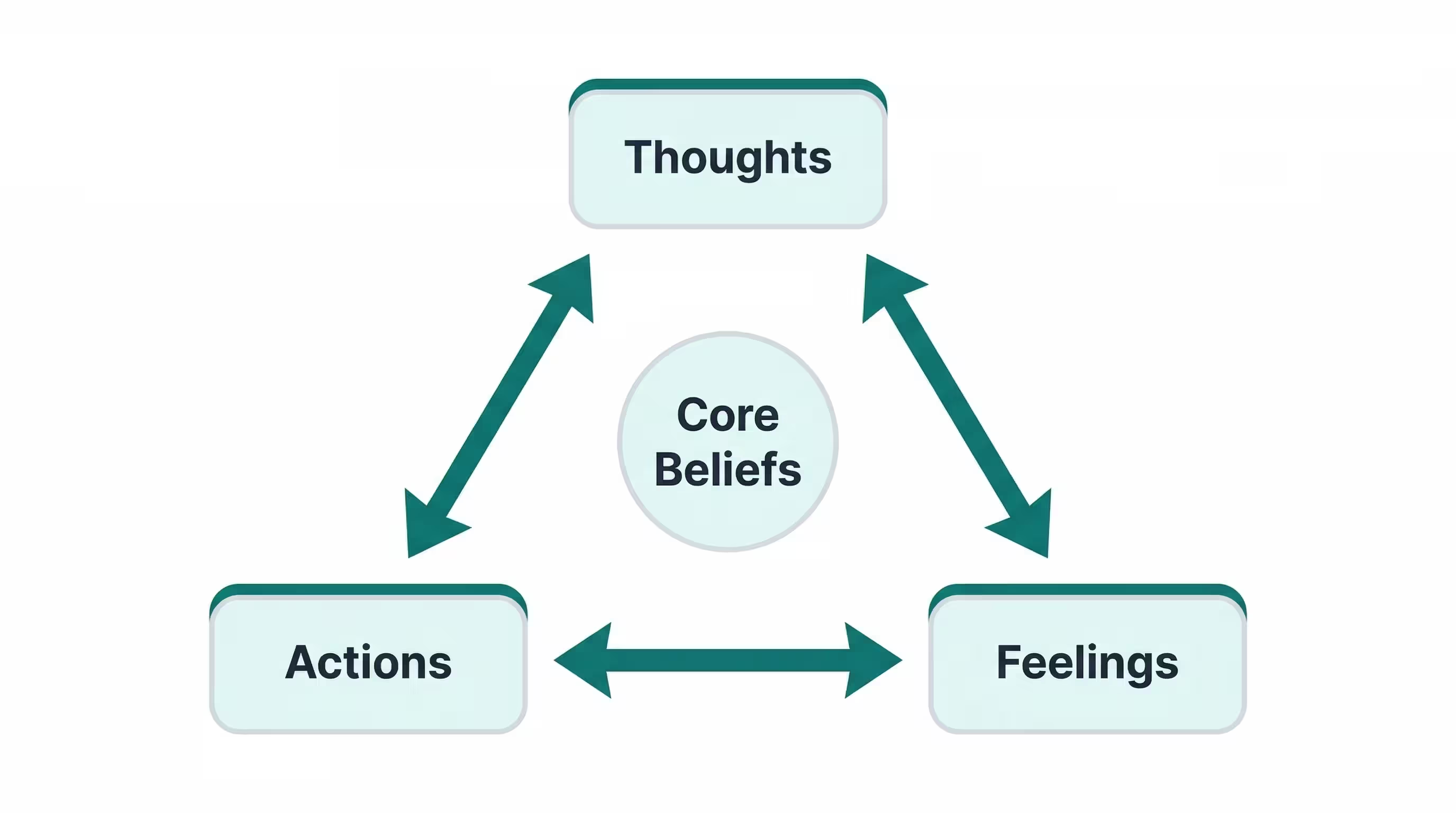
The form of therapy with the most scientific support across nearly all presenting problems is Cognitive Behavioral Therapy. The basic premise of Cognitive Behavioral Therapy is that the way you think influences how you feel, and the way that you feel influences how you act, which in turn influences how you think and feel, creating a feedback loop that can suck you into a whirlpool of negativity, fear, and suffering. At the base of this whirlpool are certain “core beliefs” that you might have about yourself, the world around you, the people around you, your past, and your future.
As I see it, traditional CBT has two key goals:
- To help you learn on a moment-to-moment basis to catch yourself when you are falling into certain “thinking traps,” challenge these unhelpful thoughts, and come up with a more balanced way to see things. This will look like identifying and challenging common “automatic thoughts” and the negative “core beliefs” that are behind them.
- To see for yourself how changing certain ways of thinking or ways of acting can lead to reductions in your suffering, thus increasing your momentum to make further positive changes.
The second point is where things like behavioral activation (changing your day-to-day routines), exposure therapy (intentionally putting yourself in uncomfortable situations and testing predictions that you make about those situations), and other techniques become useful, as we can put certain assumptions that you might have about the world to the test, and see if you feel better or worse when you make changes.
A typical course of CBT is incredibly structured and can become very formulaic. It also fails to address one key element that is contributing to your suffering (identification with thoughts, instead of identifying as the “observer” of thoughts). For this reason, I depart from traditional CBT in two ways:
- I personalize it to you and your life and do not follow a strict “script.” This keeps our work more engaging and relevant for you. We won’t waste time teaching you things that don’t apply to your situation and won’t limit ourselves to only interventions that are in the CBT treatment manuals.
- I heavily incorporate another evidence-based intervention called mindfulness. This is an aspect of therapy that is oftentimes overlooked, but in my view is what will lead to the most foundational change in your relationship you have with yourself, others, and the world around you.
Ready to take the next step?
If you're tired of feeling stuck and want an active, personalized approach to therapy, let's talk.
Schedule a free 15-minute consult